

Symptoms of
Breast Cancer
Recognizing the signs early
can make a big difference.
Stay aware, stay healthy.
saves lives.



Let's understand what
is a 'SYMPTOM' and its
relation with BREAST
CANCER.
Any new or unusual change in the appearance or condition of the breast or the surrounding area can potentially be a sign of an underlying breast problem. These changes are known as breast symptoms.
It is important to remember that not every breast symptom is caused by cancer. Many symptoms occur due to non-cancerous (benign) breast conditions.
However, any new or persistent change should always be evaluated by a doctor.
Being familiar with how your breasts normally look and feel can help you recognize unusual changes early.
Let's explore different types of symptoms
The following symptoms have been reported in a significant proportion of people diagnosed with breast cancer. However, not everyone will experience the same symptoms, and many people may have no symptoms at all, especially in the early stages.
It is important to remember that most breast changes and many breast lumps are not caused by cancer. They can result from benign (non-cancerous) breast conditions. If you notice any new or unusual change in your breast, consult a healthcare professional for a proper evaluation rather than assuming the cause.

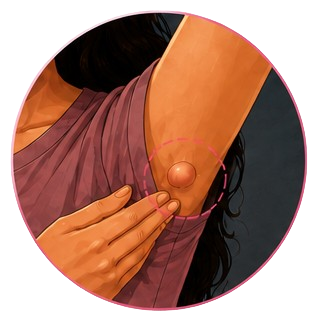
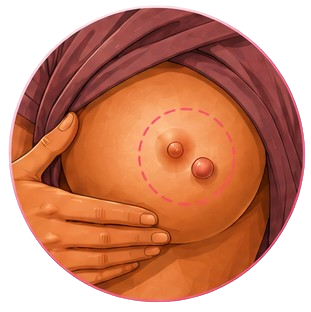
New Lump
New lump in the breast or underarm (armpit).
A lump is a type of symptom which forms when the cells in our body become cancerous and multiply in vast numbers.
However a lump is not the only symptom of breast cancer.
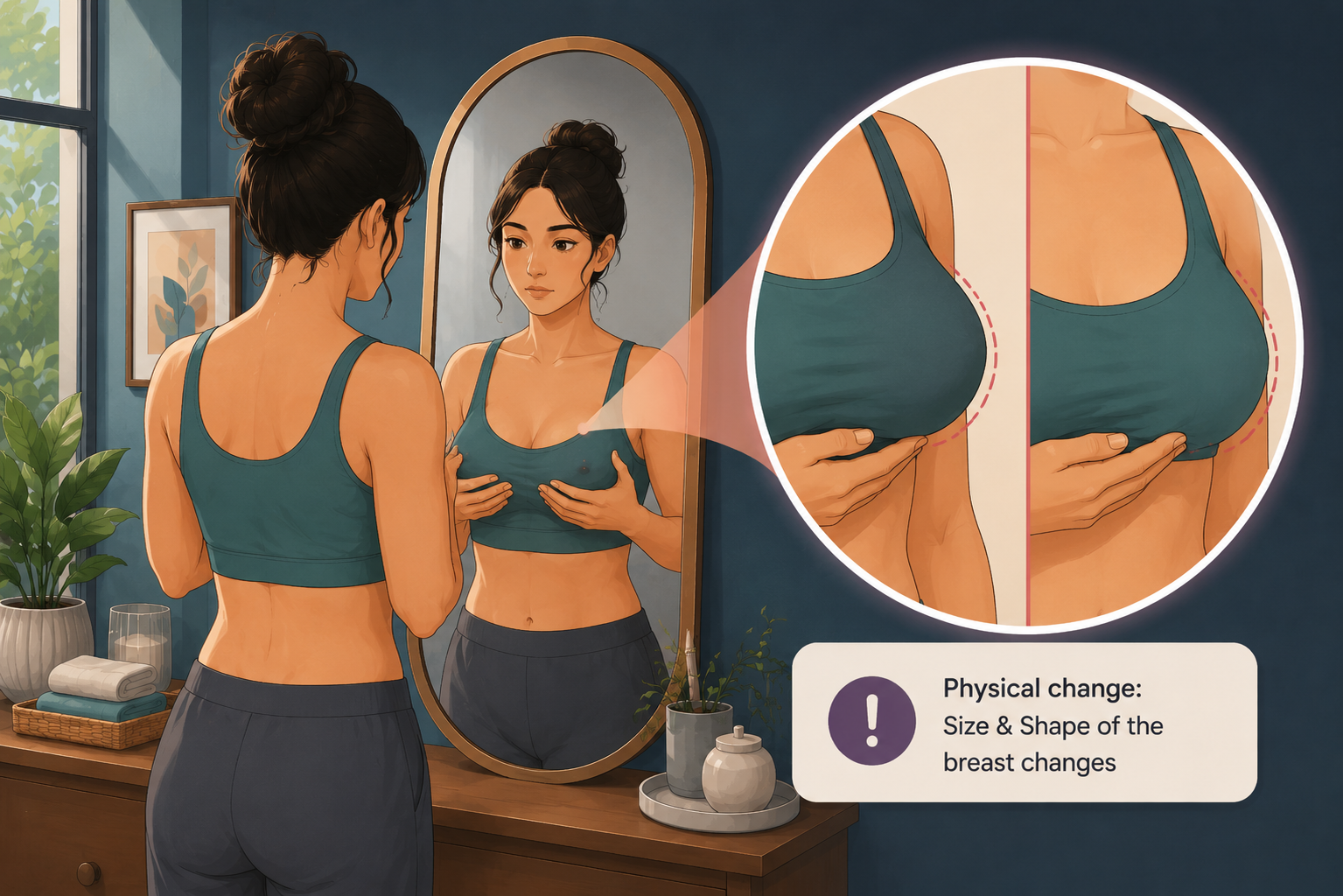
Size & Shape
Changes
Noticing your breast getting bigger or smaller, or changing shape, can be a sign of breast cancer. It could mean one breast is different from the other or that the shape looks odd. These changes happen because of cancer cells growing in the breast tissue.
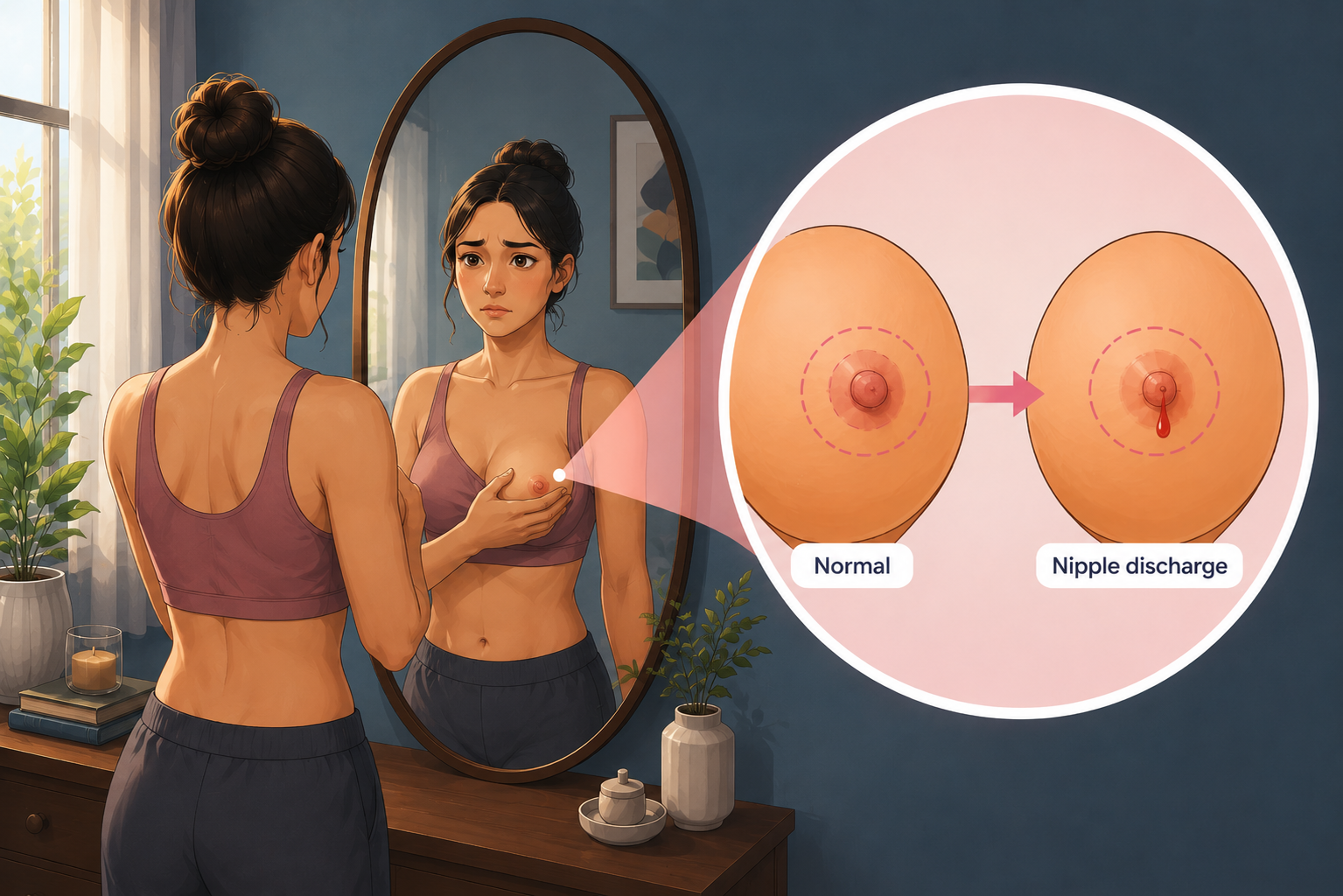
Nipple Discharge
If you see blood, watery, or greenish fluid coming from your nipple, it could be a sign of breast cancer. This discharge may not be normal and could be caused by cancer cells in the breast.
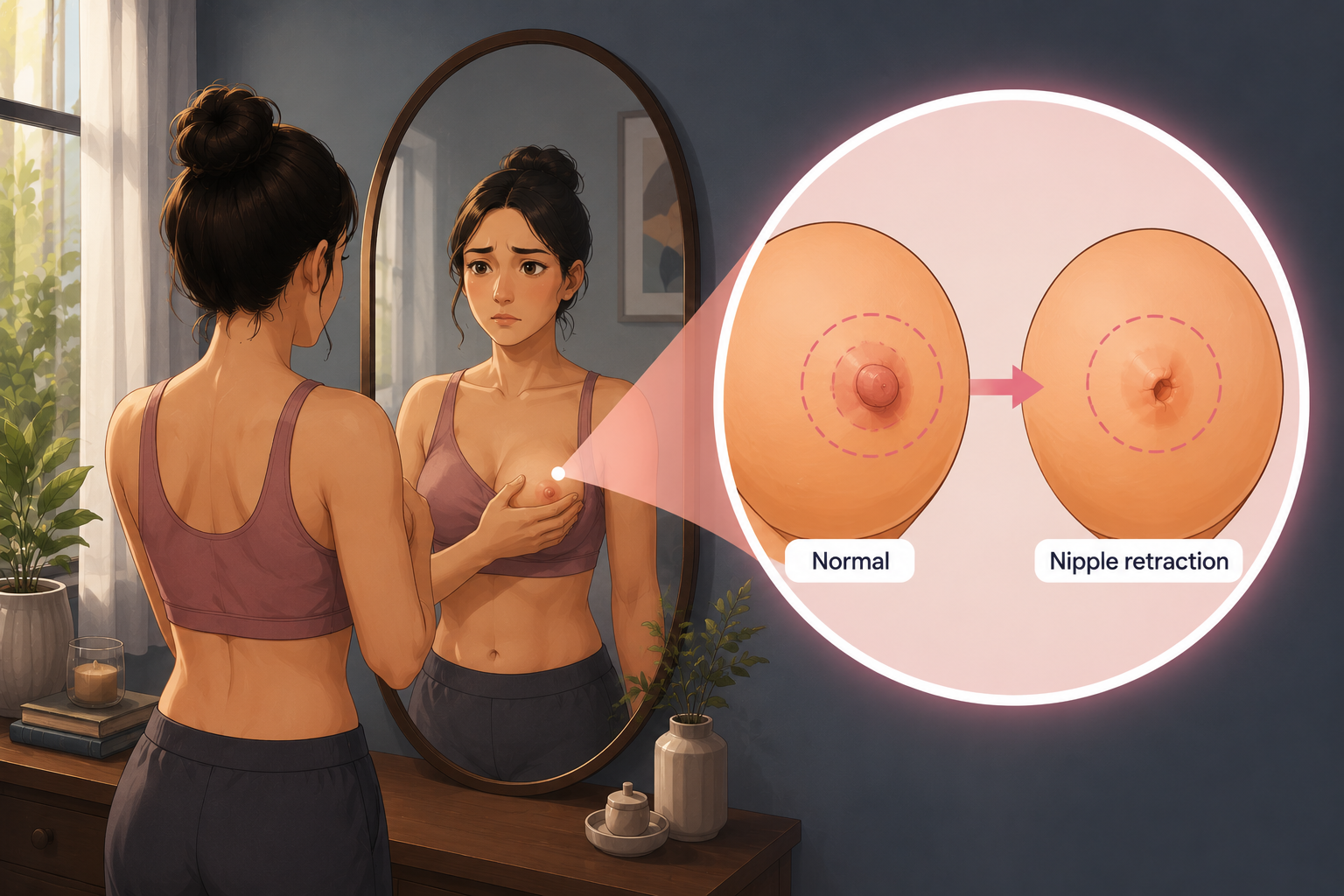
Nipple Retraction
When a nipple turns inward, it’s called nipple retraction. This means the nipple, which usually points outward, starts to point inward instead. It can happen gradually or suddenly. Nipple retraction can sometimes be a sign of breast cancer.
Skin & Pain
Also, skin rashes or irritation, and ongoing pain that is not related to your menstrual cycle but persists after your period, occurring in only one breast, are also included in the list of symptoms for breast cancer. Therefore, if you notice any symptoms, it is important to consult a medical professional.



Take Action

After becoming aware of the symptoms, one can pursue self-examination, which can be done at home in a step-by-step manner.

If you notice any unusual symptoms, it’s crucial to see a doctor for a thorough evaluation.
Regular self-examinations, combined with clinical breast exams performed by a healthcare professional, form a vital part of detecting breast cancer early.
Medical Disclaimer
Disclaimer: This article is provided for medical knowledge and educational purposes only. It is not intended to replace professional medical advice, diagnosis, or treatment. Always consult a qualified healthcare professional for any medical concerns.