
Breast
Examination
A crucial process for early detection of breast cancer and other abnormalities, potentially saving lives through prompt action.


Let's first understand
what is
breast examination
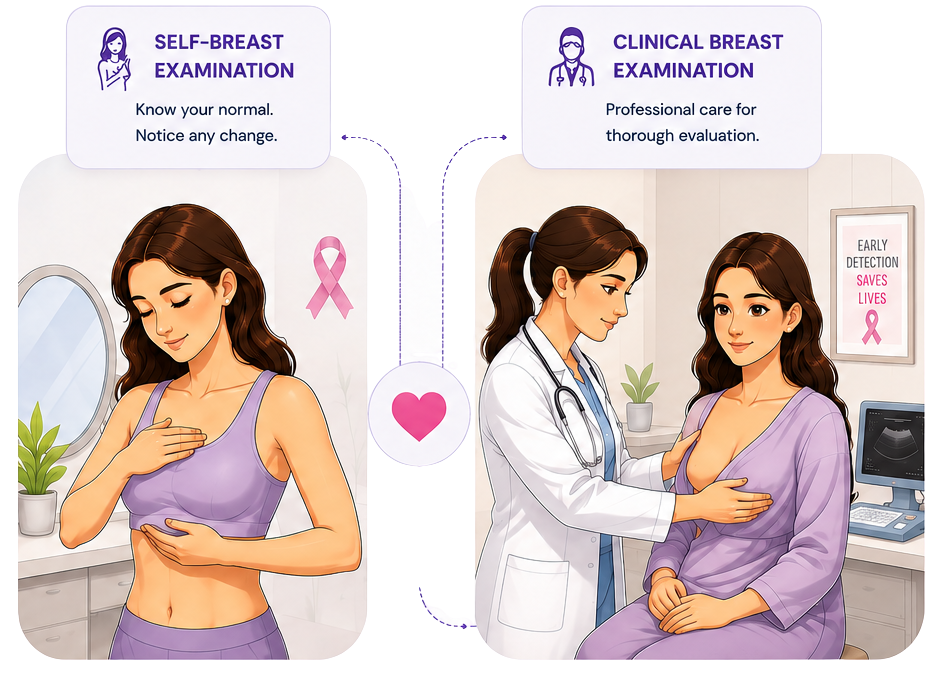
Breast examination involves checking the breasts for any changes or abnormalities. It can be done in two main ways: self-breast examination, where a person checks their own breasts regularly for lumps or changes, and clinical breast examination, where a healthcare provider examines the breasts during a check-up.
During these examinations, the breasts are visually inspected for any changes in appearance, and they are also felt to detect any lumps or unusual textures.
Understanding the early and common symptoms of breast cancer is important before pursuing regular breast examinations. This helps in becoming self-aware and taking timely action towards breast cancer.
Therefore, breast examinations are important for detecting breast cancer and other breast-related issues early, which can improve treatment outcomes.

Let's take a view
to the two types
of examination
Clinical Breast
Examination (CBE)
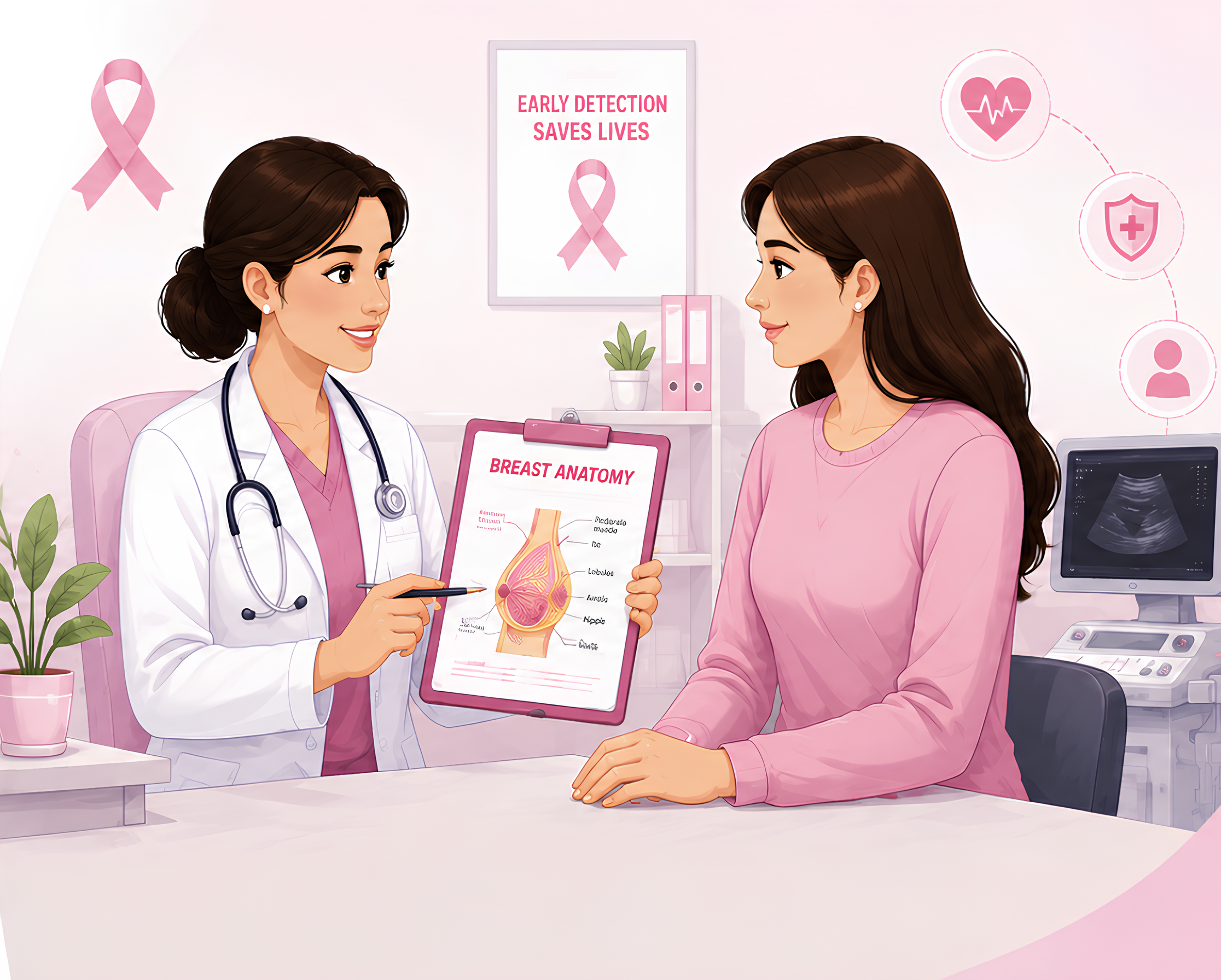
During the examination, your healthcare provider, who is trained for it, carefully checks your breasts, underarms, and the area below your collarbone to find any changes that may be signs of cancer or other medical issues. They also visually inspect your breasts while you are sitting and physically examine them while you are lying down. This healthcare provider can be your general physician or a gynecologist.
Getting your breasts checked by a healthcare provider is really important because they might spot something that you didn't even realize could be a sign of breast cancer.
Step-by-step process of CBE
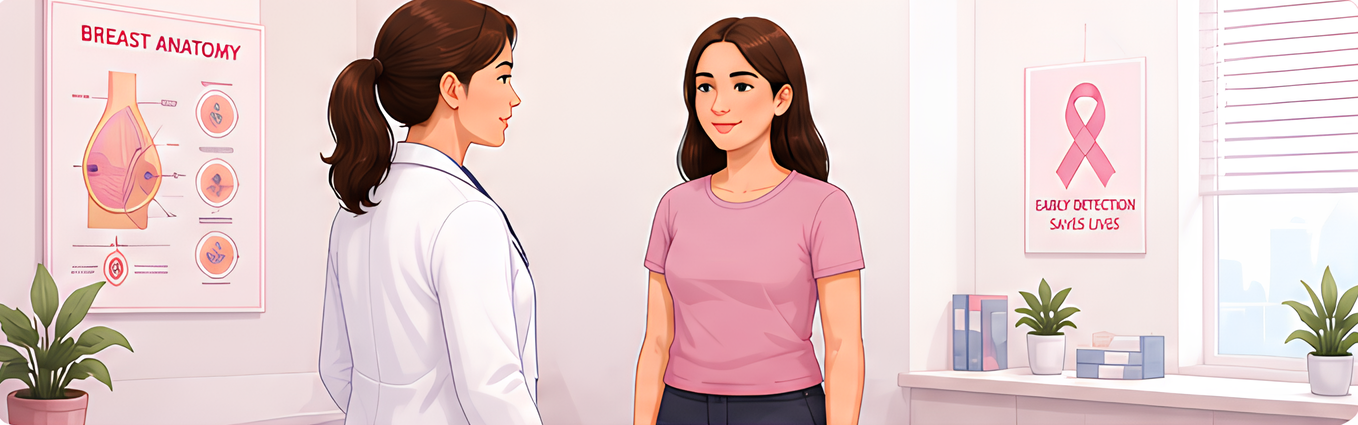
Visual Inspection
The healthcare provider visually checks your breasts while you are sitting or standing. They look for any visible changes in the skin, size, shape, symmetry, swelling, redness, dimpling, or nipple discharge.

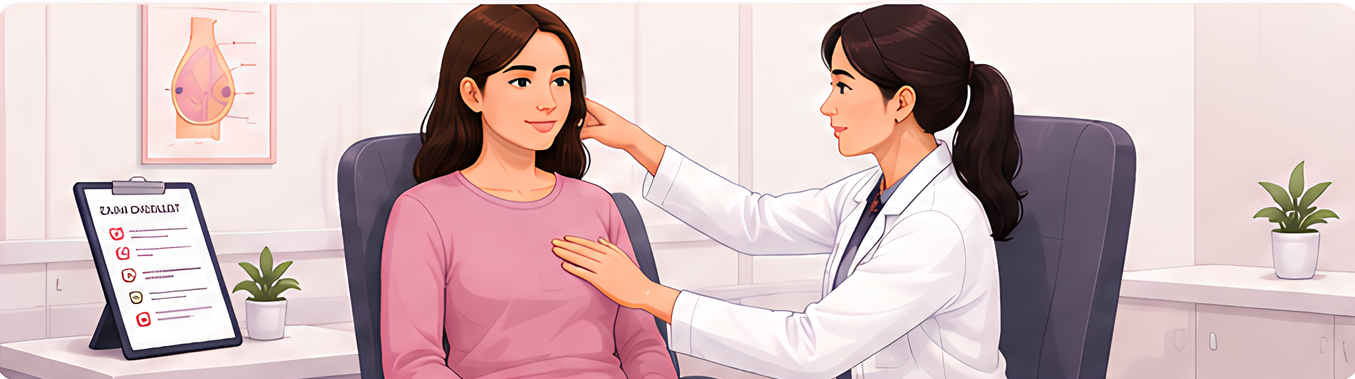
Examination While Sitting
The provider uses the pads of the fingers to gently feel the breast and underarm area in a circular pattern, checking for any lumps, thickening, or unusual texture.
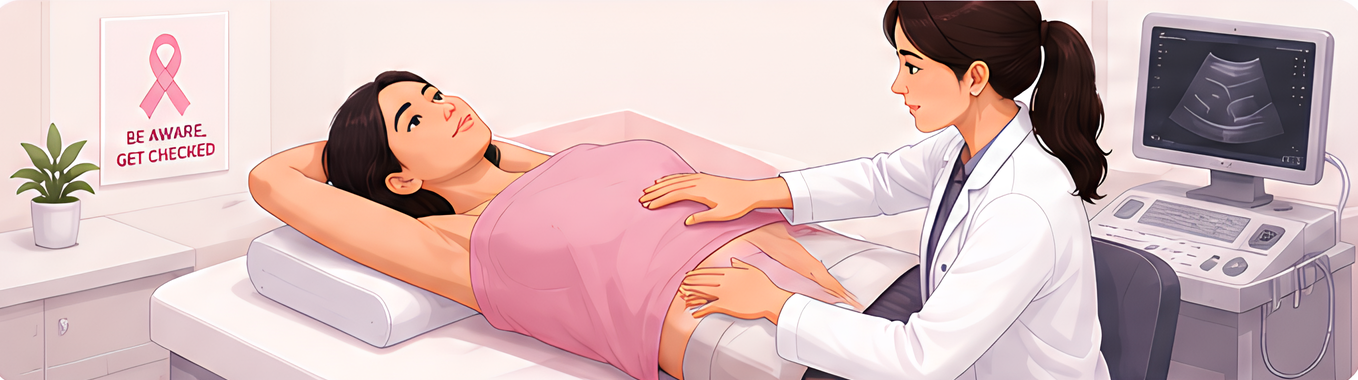
Examination While Lying Down
You will be asked to lie down with one arm raised above your head. The provider examines the entire breast, including the deep tissue, using different levels of pressure.

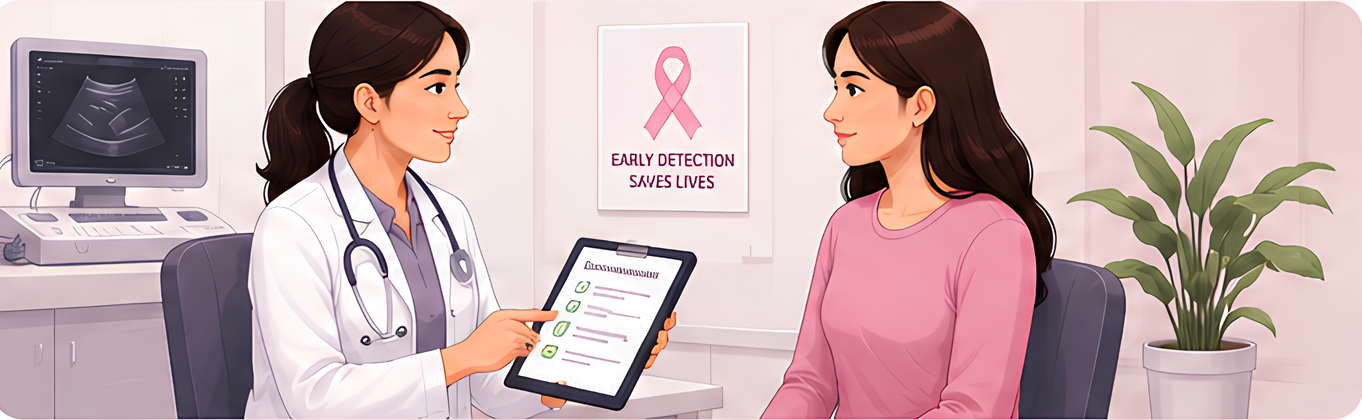
Discussion & Next Steps
The provider discusses the findings with you. If any changes are found, they may recommend further tests, imaging, or follow-up examinations if needed.

Self Breast
Examination (SBE)

A breast self-exam is a step-by-step method that can be performed at home to examine your breasts. It is the best way for you to become familiar with your own breasts. Additionally, regularly looking at and feeling your breasts can help identify any changes that may occur, which could be due to cancer or other medical issues.
It is important to remember that self-breast examination alone may not always detect cancer early. Therefore, it is crucial to pursue self-breast examination along with other methods for early detection.
When should we pursue SBE
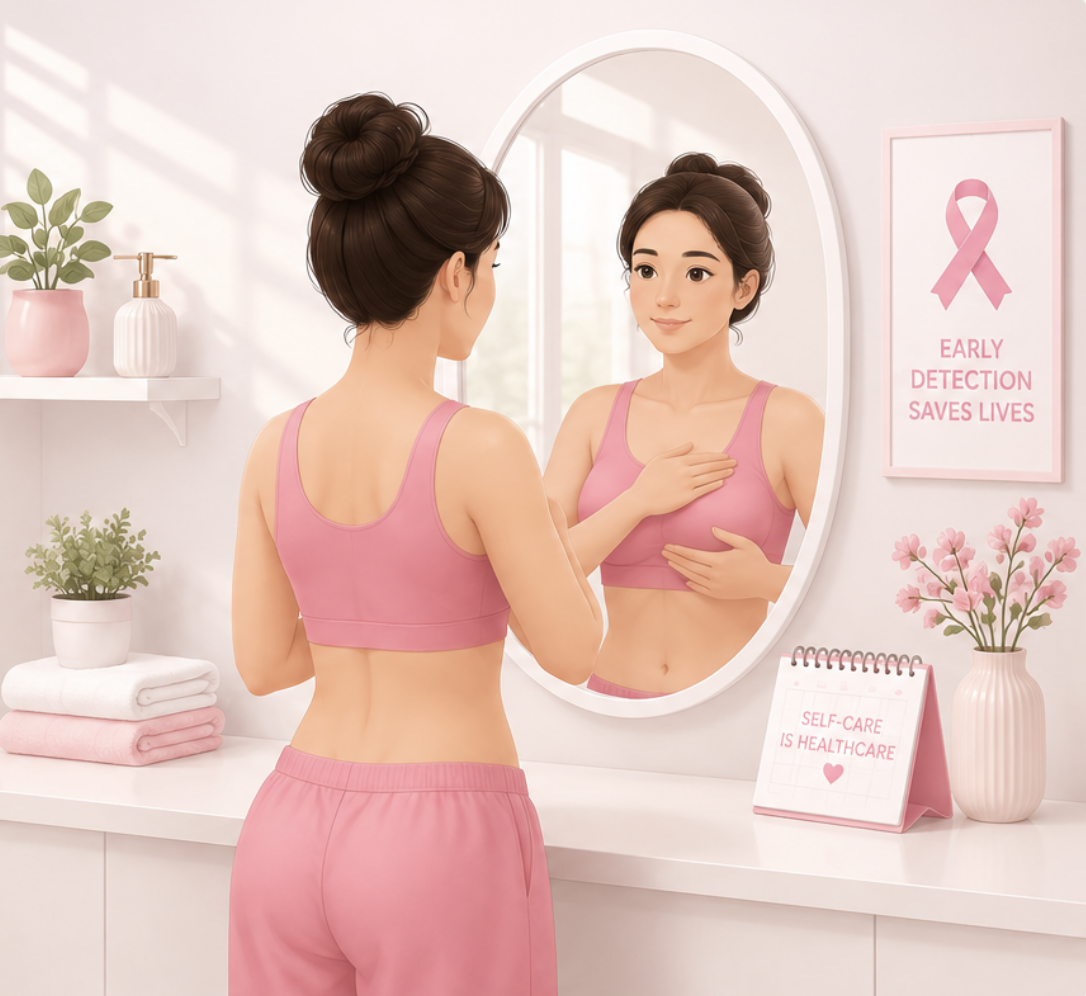
A breast self-exam can be pursued regularly at any time of the day, for example, while taking a bath or while dressing up in front of the mirror, as it only takes a few minutes.
Women who are having a regular period should perform SBE after the period ends, as breasts are less likely to be swollen or tender during this time, making it easier to detect any changes.
Additionally, women who have gone through menopause can choose a specific day each month to perform the exam.
Steps for SBE
A breast self-exam can be pursued by following the below steps.
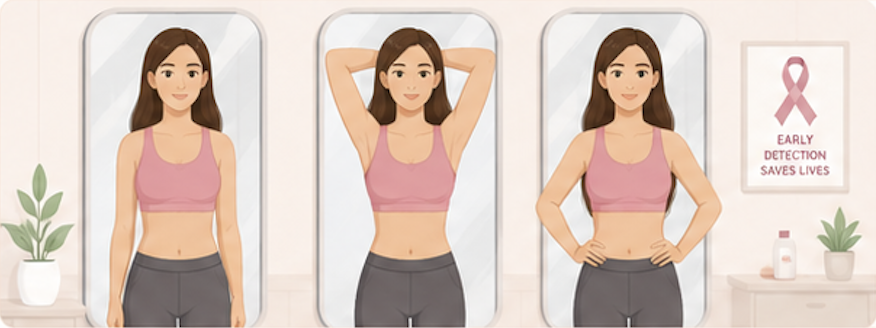
Mirror Check
Stand shirtless in front of a mirror. Keep your arms down, then raise them above your head, and finally place your hands on your hips. Look for any changes in the size, shape, or color of your breasts. Check for dimpling, swelling, redness, or nipple discharge.

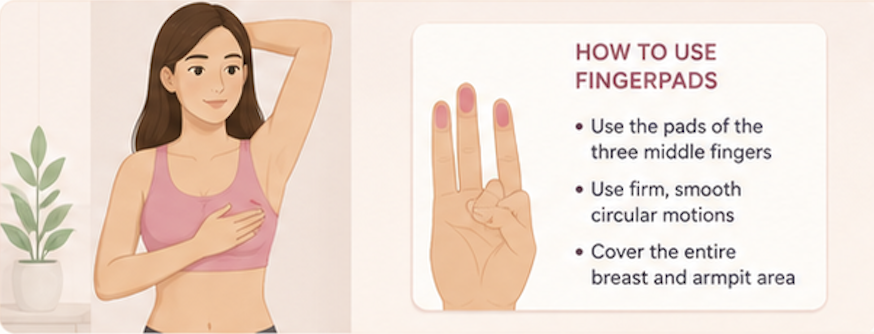
Standing Manual Exam
Use the pads of your three middle fingers to gently feel your breasts. Move your fingers in small circular motions, covering the entire breast area, including the upper chest, underarms, and around the nipples. Check for any lumps, thickening, or unusual changes.
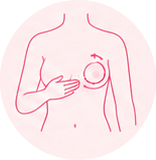
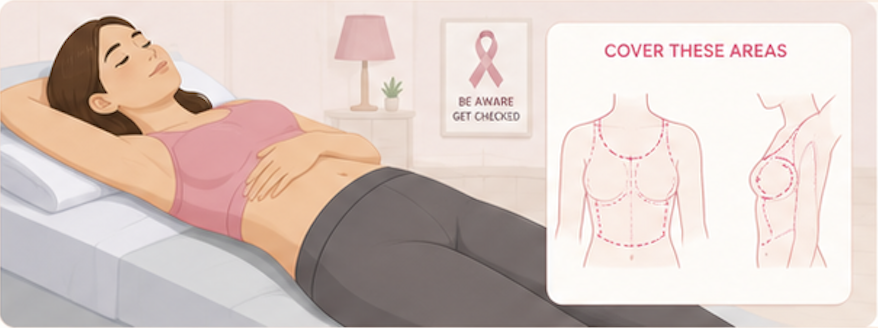
Lying Down Manual Exam
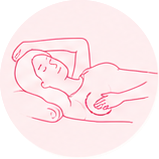
Lie on your back with a pillow under one shoulder and the corresponding arm raised above your head. Use the same circular motion to feel your breast from top to bottom and side to side. Apply light, medium, and firm pressure to feel all layers of tissue. Repeat on the other breast.

Benefits of
breast examination
Breast examination is vital for monitoring breast health and spotting potential issues early on. The combination of clinical breast examination (CBE) and self-breast examination (SBE) can significantly improve the chances of identifying any problems sooner rather than later. This is crucial for maintaining overall health and well-being.
Early Detection Saves Lives
Helps in identifying changes or abnormalities at an early stage, when treatment is most effective.
Improves Treatment Outcomes
Early detection increases the chances of successful treatment and can prevent the cancer from spreading.
Increases Self-Awareness
Helps you understand what is normal for your body and notice any unusual changes.
Empowers You to Take Charge
Encourages regular self-checks and health check-ups, promoting a proactive approach to breast health.
Compliments Regular Screening
When combined with mammograms and clinical exams, it provides a more comprehensive approach to breast care.
Medical Disclaimer
Disclaimer: This article is provided for medical knowledge and educational purposes only. It is not intended to replace professional medical advice, diagnosis, or treatment. Always consult a qualified healthcare professional for any medical concerns.
Examination Guides
Step-by-step guidance verified by leading medical centers.