

Risk Factors of
Breast Cancer
Understanding your risk is the first step towards prevention and early detection.
Knowing the factors that may increase the risk of breast cancer empowers you to make informed choices and take proactive steps for a healthier tomorrow. Awareness today can lead to early detection and better outcomes.
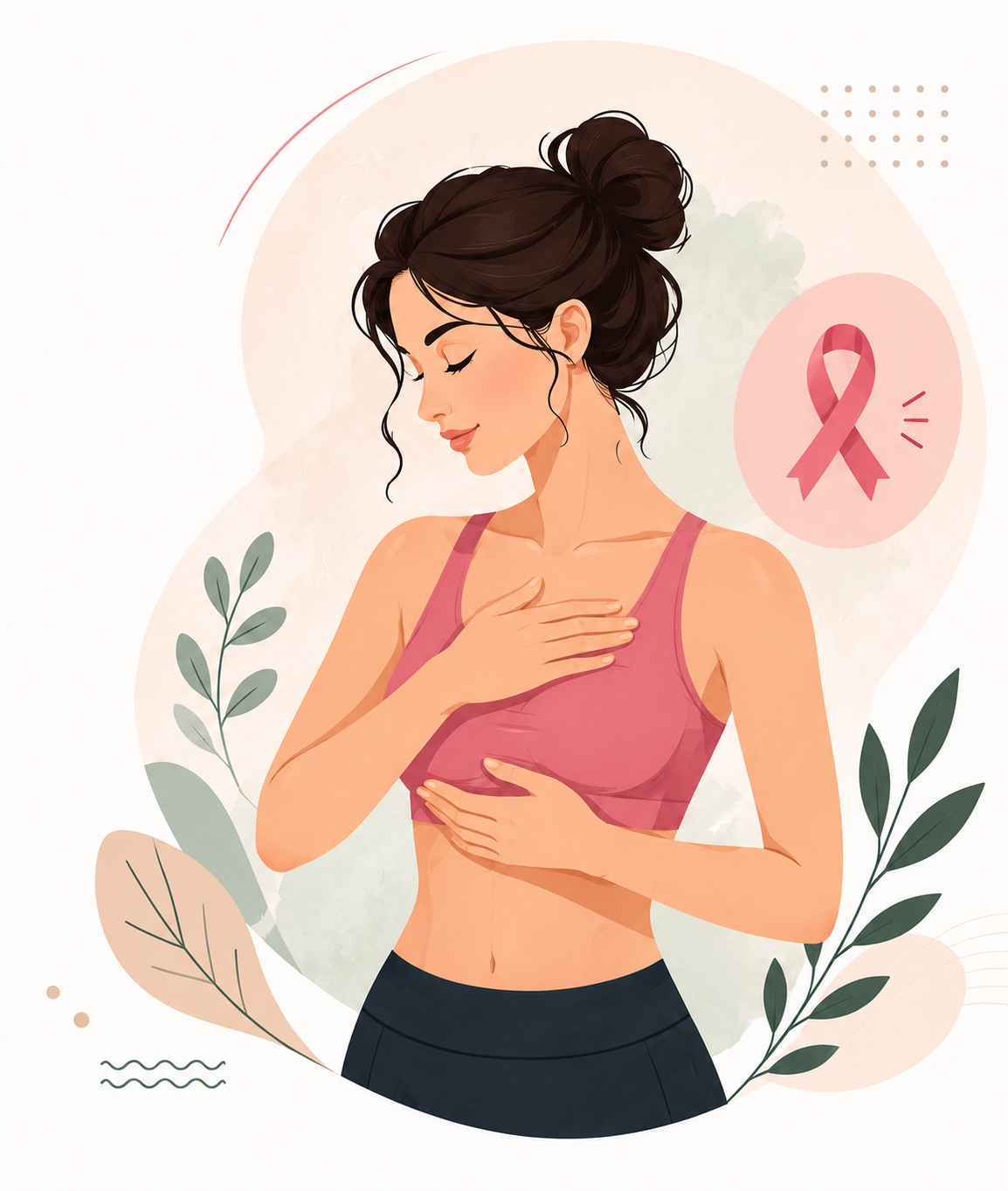
Knowledge is
Your First
Defense
A risk factor of cancer is an aspect that increases the probability or likelihood of developing cancer that we have stated below. However, it does not guarantee that the cancer will occur.
Risk factors of breast cancer are of various types; they can be genetic (unavoidable risk), environmental, or lifestyle-related (avoidable risk). Interestingly even though these factors are not always the sole reason for breast cancer, it is seen that individuals who don't have the risk factors can also develop cancer, it's important to know them because everyone is at risk of breast cancer, and some of us are at a higher risk than others.
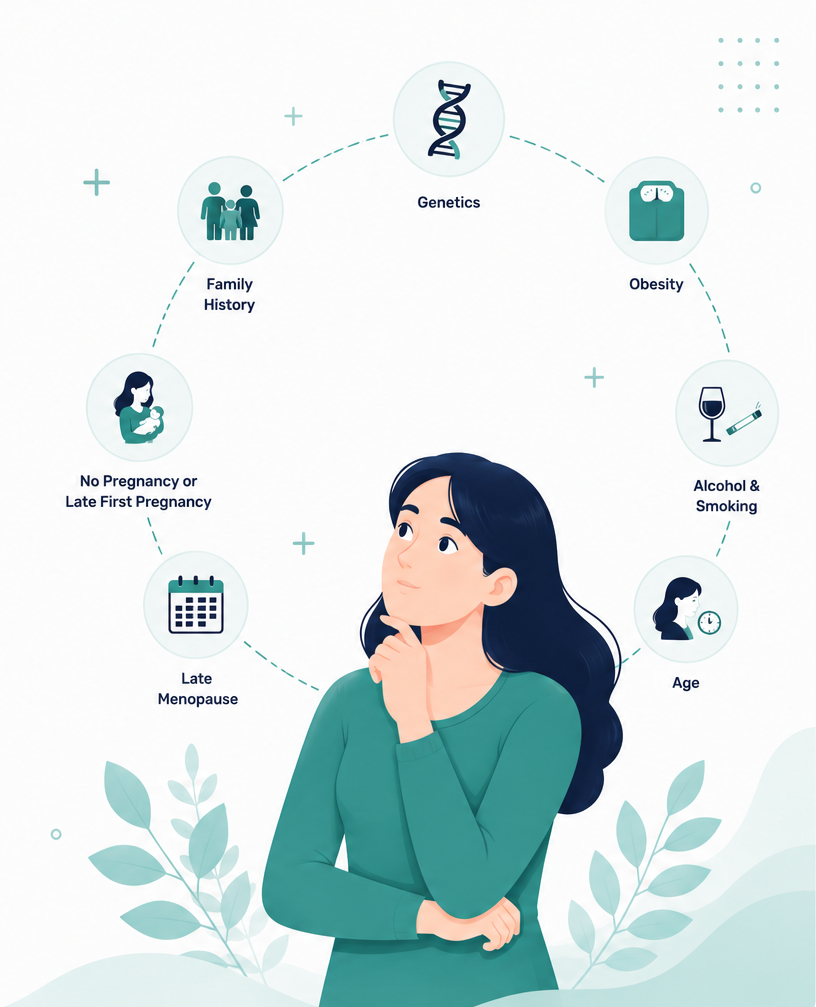
Factors You Cannot Change
These are inherent biological and environmental aspects of our journey. While unavoidable, understanding them is the first step in personalized prevention.
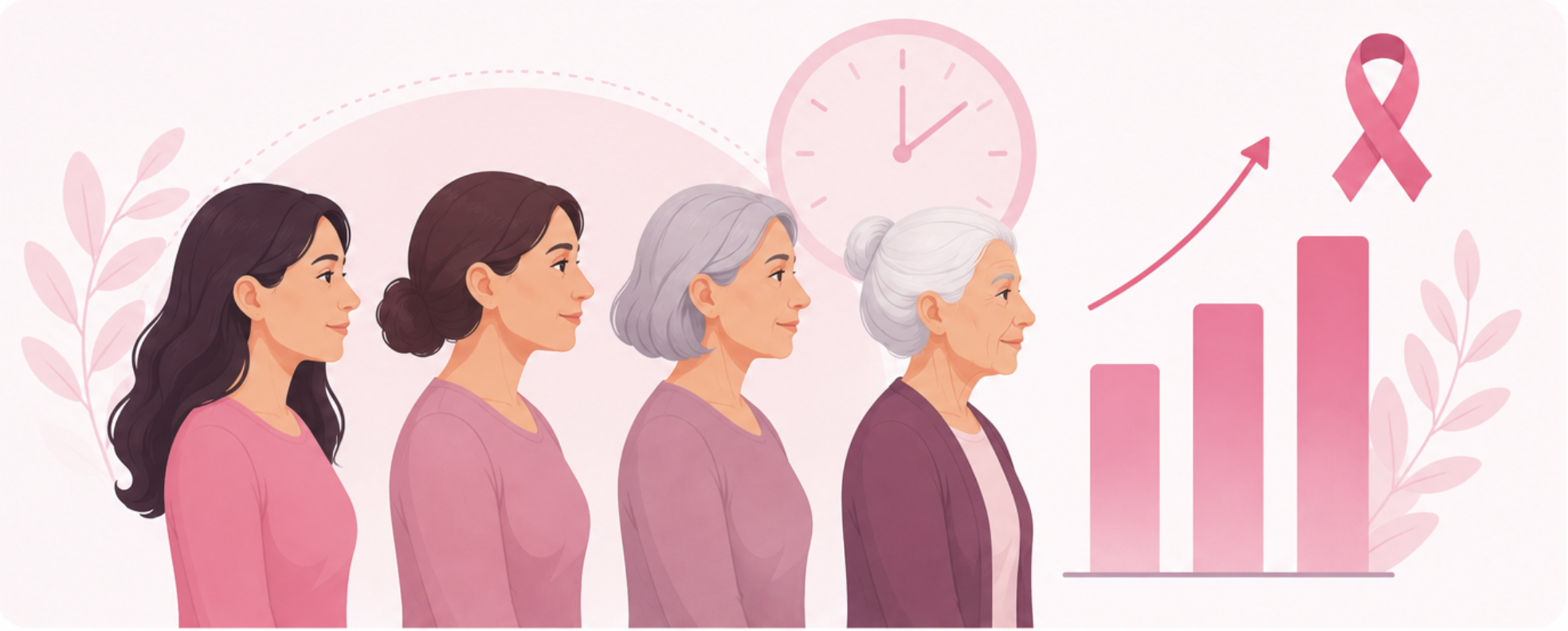
Getting older raises the risk of breast cancer. This is because as we age, our breast cells divide more, which can lead to mistakes (mutations) that cause cancer. Also, the hormone estrogen, which can make breast cells grow and raise cancer risk, increases as we age. That’s why as in most cases of breast cancer it is seen that women between 40 to 50 have a medium chance of getting breast cancer, while those between 50 to 60 have the highest risk.
Take a Self Check
Understanding these factors will help people take charge of their health, make smart choices about prevention and early detection, and feel less worried about getting breast cancer. Furthermore take a self check and see if any of risk factor listed below applies to you.
Factors You Can Manage
While some risks are baked into our biology, others are linked to our daily choices and environments. Managing these can significantly lower your overall probability.
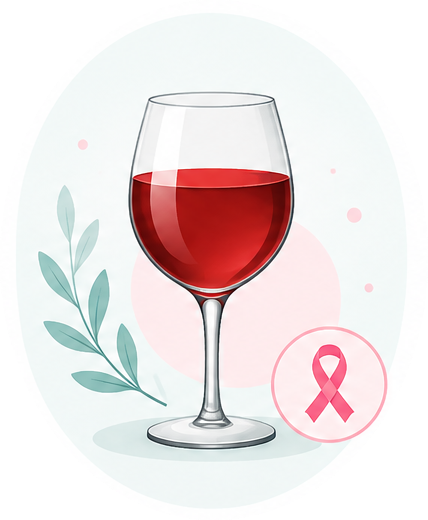
As higher estrogen levels are linked to an increased risk of breast cancer in women, alcohol consumption plays a significant role in causing a rise in the level of estrogen in the blood as it can change the way a woman’s body metabolizes estrogen. Therefore, alcohol consumption is a risk factor for breast cancer, as it has been found that estrogen levels are higher in women who drink alcohol than in non-drinkers.
What to
Do Next
It is important to note that if an individual encounters any of the risk factors mentioned below, it is advised to consult a doctor before taking further steps.

Medical Disclaimer
Disclaimer: This article is provided for medical knowledge and educational purposes only. It is not intended to replace professional medical advice, diagnosis, or treatment. Always consult a qualified healthcare professional for any medical concerns.