
Lung Cancer
Essential knowledge on lung health, diagnostic advancements, and the critical importance of early detection.
Understanding Lung Function
Lung cancer starts in the lungs, spongy organs responsible for oxygen intake. Before cancer develops, airway cells can undergo dysplasia.
Prolonged exposure to harmful substances, notably tobacco smoke, causes cell damage. Early detection through low-dose CT scans improves outcomes.
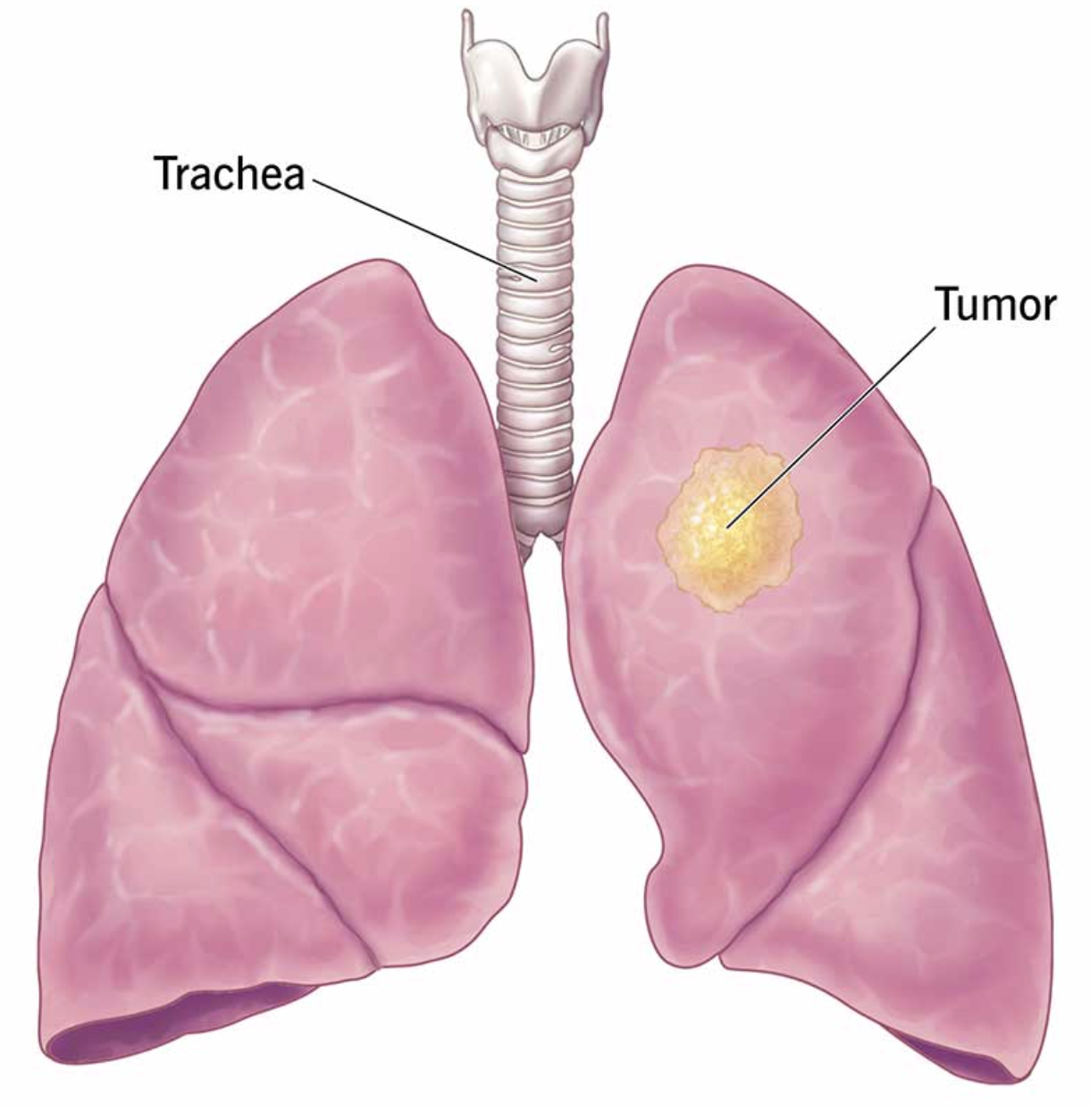
Different Aspects of Lung Cancer
Comprehensive information to help you navigate care pathways.
What are the symptoms?
Lung cancer can have both noticeable and mild symptoms that might suggest it’s time to see a medical professional.
What are the risk factors?
Smoking is the most common risk factor for lung cancer, but other factors like radon or pollution also contribute.
Lung Cancer Types
According to the specific cell that has become cancerous in the lungs, the type of lung cancer is categorized.
What are the stages?
The stages of lung cancer help determine the extent of the disease, guiding treatment options and prognosis.
What is the diagnosis?
The diagnosis helps in identifying the presence of the disease, determining its stage, and informing treatment strategies.
What is the treatment?
Depending on the stage and type of cancer, the course of treatment for lung cancer varies from patient to patient.
What are the myths?
It is important to differentiate between myths and facts about lung cancer to promote awareness.
What are the side effects?
Knowing the side effects of lung cancer treatment is important for informed decisions and effective symptom management.