
Treatment for Breast Cancer
The Path to Recovery
Understanding treatment is vital. It empowers you to make informed choices for effective care and improved outcomes.
Multidisciplinary
Planning
After diagnosis, a team of doctors designs a plan involving a combination of therapies. The specific order and number of treatments vary based on your unique biological profile.
Cancer Stage
Determines if localized (surgery/radiation) or systemic (chemo) is best.
Cancer Type
Hormone-positive, HER2-positive, and triple-negative respond differently.
Tumor Profile
Size, location, and lymph node spread affect surgery choices.
Biomarker Status
ER/PR and HER2 status decide the need for targeted therapies.
Treatment Flows
Treatment plans are personalized. A metastatic diagnosis may prioritize systemic therapy first, while an early-stage diagnosis often begins with surgical intervention.
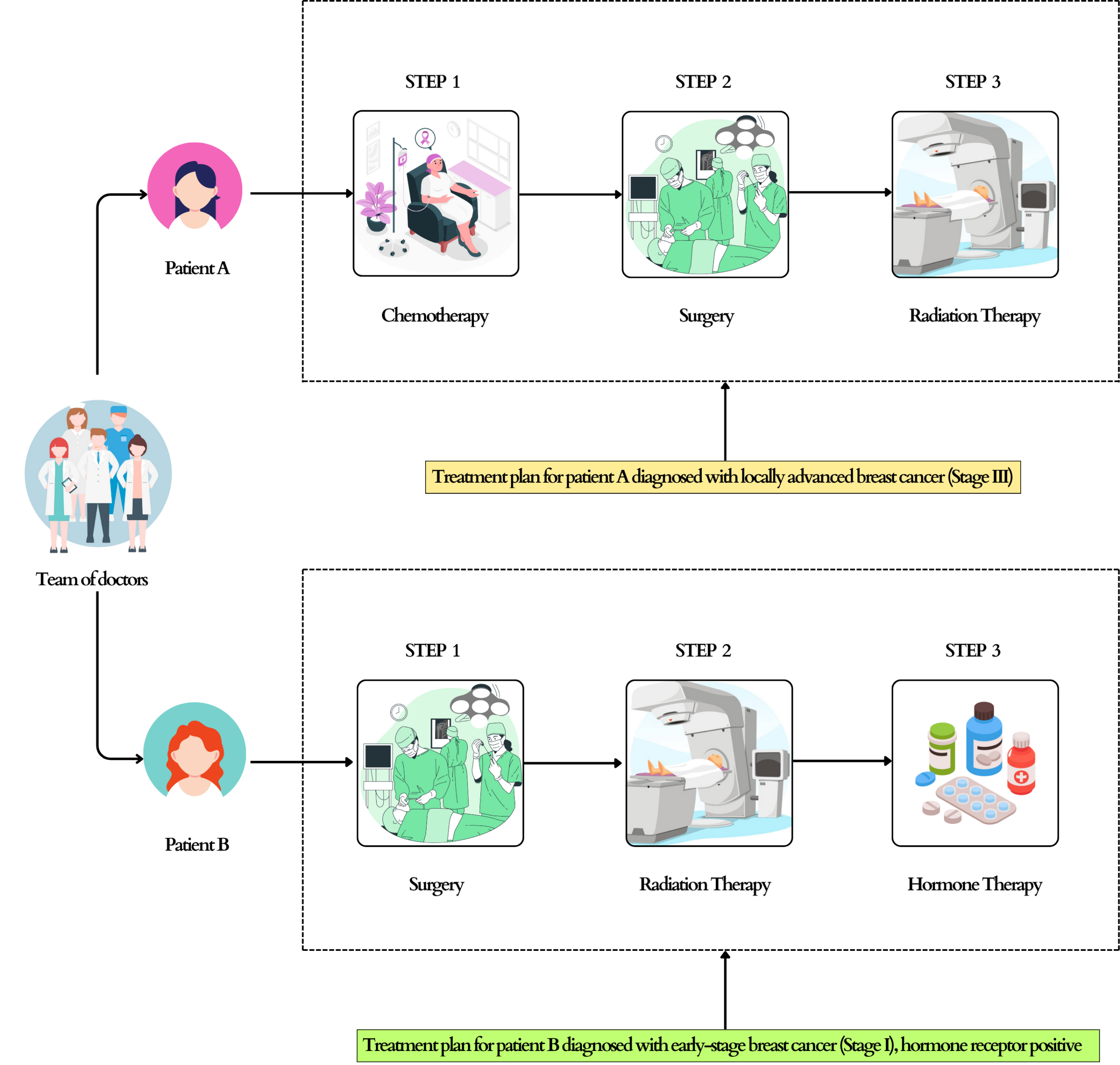
Standardized Pathway Architecture
Therapy Options
Core Modalities
Surgery
"A surgery for breast cancer helps to prevent cancer from spreading by removing the cancerous tissue and surrounding breast tissue."
Radiation Therapy
"Radiation therapy is a crucial part of breast cancer treatment, consisting of two types. Depending on the specific condition, one type is provided."
Systemic Drug Therapy
"Uses medicines taken by mouth or through an IV to kill cancer cells all over the body. This includes chemotherapy, hormone therapy, and targeted therapy."
Patient Tolerance & Health
"A patient's age and overall health status can impact their ability to tolerate certain treatments and the risks of side effects. Older patients or those with other medical conditions may be less able to withstand the side effects of intensive chemotherapy."