
Symptoms ofCervical Cancer
Recognizing the signs early can lead to
timely evaluation, better outcomes, and peace of mind.

Let’s understand what is a ‘symptom’
and its relation with cervical cancer.

A symptom is a change in your body that you can experience or notice. It acts as an indication that you might have cancer or an underlying disease.
In terms of cervical cancer, symptoms are changes in your body that could indicate the presence of cancer in the cervix, which is the lower part of the uterus.
Cervical cancer is a type of cancer that usually shows no symptoms during its early and precancerous stages. This is because cancer cells often develop slowly over 15 to 20 years without causing any noticeable changes at first.
However, once the cancer spreads into nearby tissues, symptoms are noticeable, which are termed as common symptoms.
Furthermore, when the cancer is not treated and advances to a severe stage, the symptoms can become more noticeable and severe. Below, we have listed these types of symptoms in cervical cancer, which might help an individual seek medical help at the right time.
It is also important to remember that not everyone with cervical cancer will have symptoms in the early stages, as mentioned above. Therefore, regular screening for cervical cancer plays a crucial role in detecting cancer early which is not noticeable at first.
Let’s explore the different types of symptoms.
Cervical cancer can show up in two phases: the Common Symptoms that creep in like shadows, and the Advanced Symptoms that hit like a full-blown storm.
Spotting the symptoms early could mean the difference between winning the battle and protecting your health.
Common Symptoms of Cervical Cancer to Watch For
When it comes to cervical cancer, recognizing the early signs can make all the difference. The symptoms can be subtle and easy to overlook, but with awareness and vigilance, you can catch them early and take action. Let’s explore the common symptoms to watch for and stay ahead in protecting your health.
Pelvic Pain
A dull ache or constant pain in the lower abdomen or pelvic region that doesn’t go away.
It may feel like pressure, heaviness, or cramps and can interfere with daily activities.

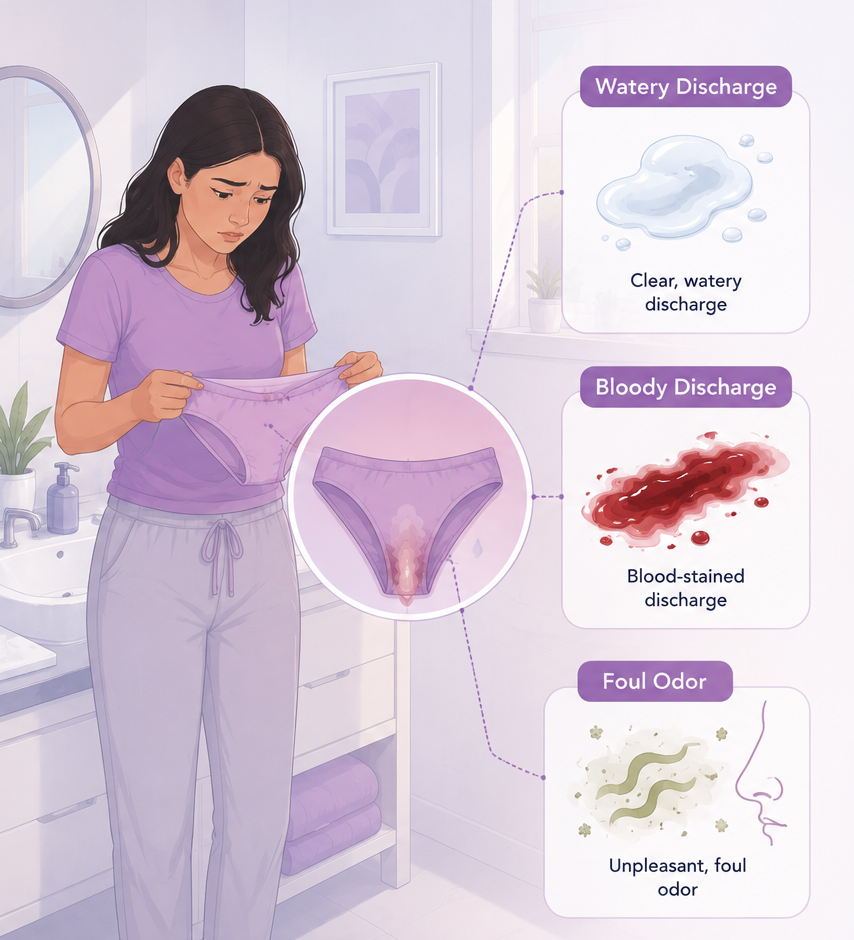
Abdominal Vaginal
Discharge
Watery or bloody vaginal discharge that may be heavy and can have a foul odor.
This discharge may occur outside your normal menstrual period and should not be ignored.
Vaginal Bleeding After Sex,
Between Menstrual Periods
or After Menopause
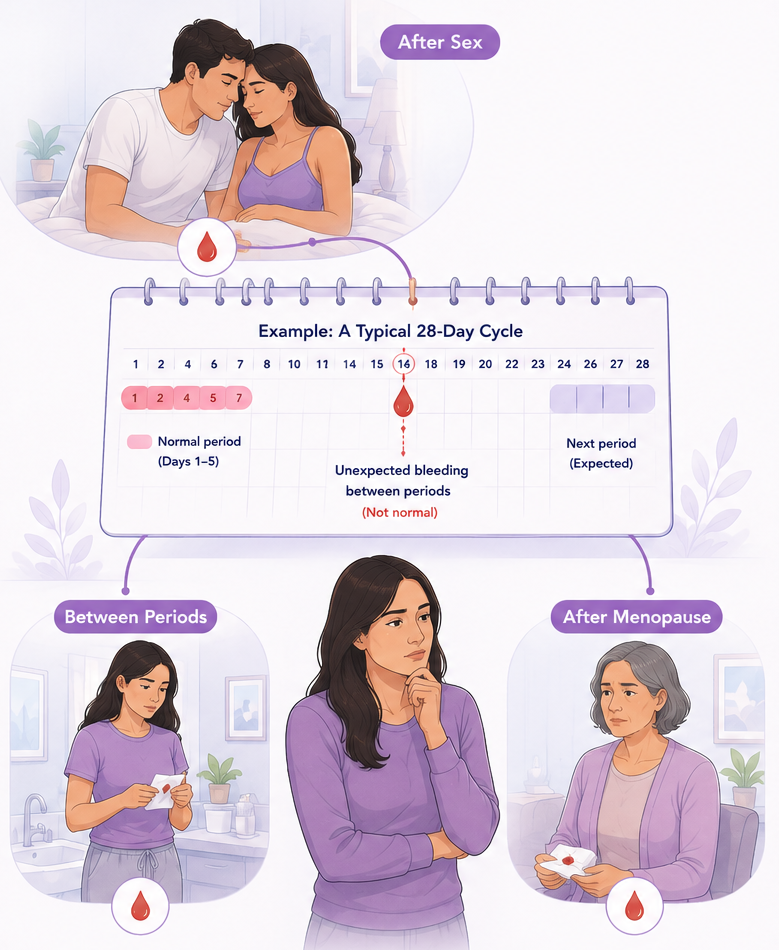
Vaginal Bleeding After Sex,
Between Menstrual Periods
or After Menopause
Bleeding that happens when you are not expecting it, such as after sexual intercourse, on days between your regular periods, or after you have already reached menopause.
For example, your period ended a week ago, but you notice spotting or bleeding again. You may notice bleeding after sexual intercourse. Or you may have already gone through menopause but experience any vaginal bleeding.
A small amount of spotting can sometimes occur for non-cancerous reasons. However, if the bleeding is recurrent, unexplained, or unusual for you, it should be evaluated by a healthcare professional.
Advanced Symptoms
of Cervical Cancer
As cervical cancer progresses, the symptoms can become more intense and harder to ignore. Recognizing these advanced signs is crucial.
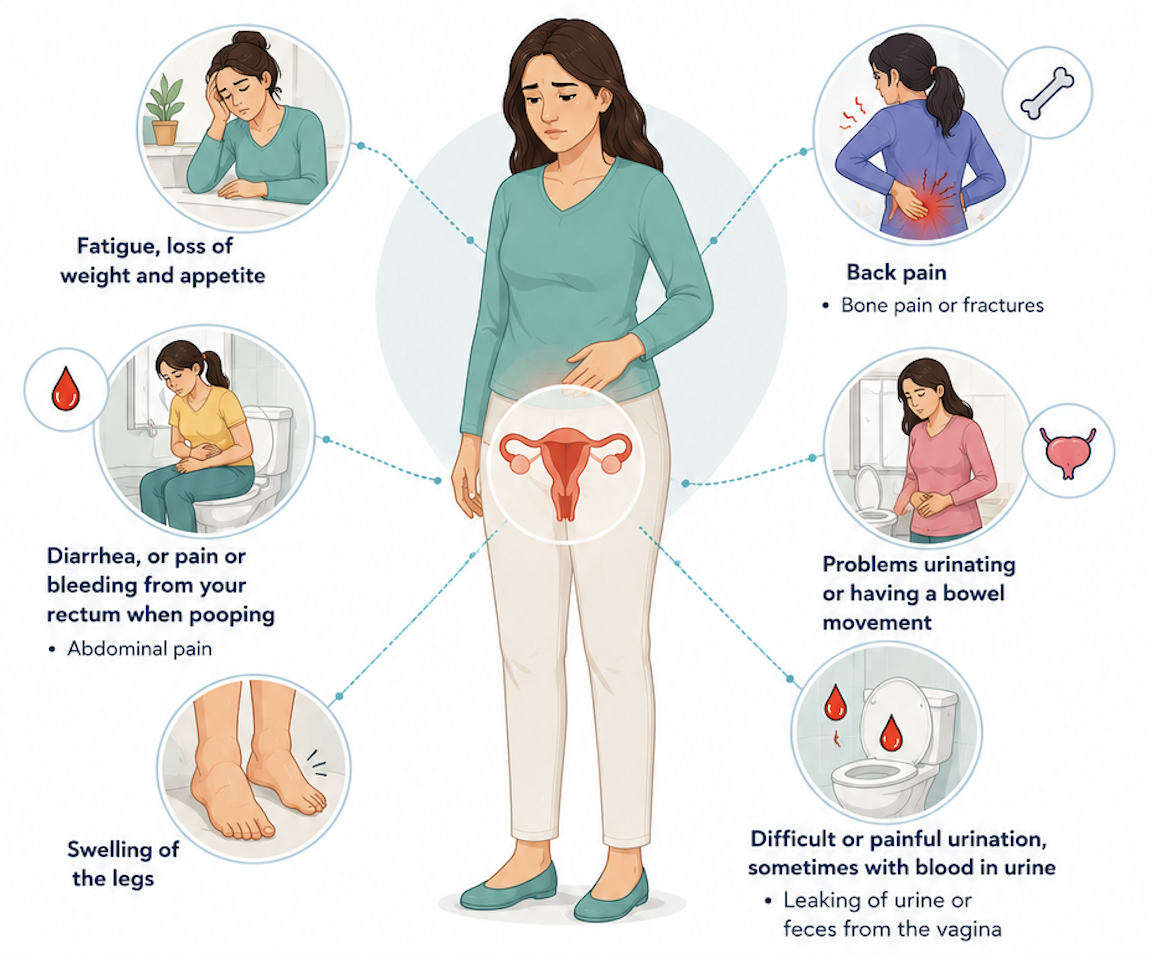

Fatigue, loss of weight and appetite

Diarrhea, or pain or bleeding from your rectum when pooping

Swelling of the legs

Back pain
Persistent back pain that may spread to the lower back or legs.
• Bone pain or fractures

Problems urinating or having a bowel movement

Difficult or painful urination, sometimes with blood in urine
Pain, burning, blood in urine or leakage from the vagina.
• Leaking of urine or feces from the vagina

These signs and symptoms can also be caused by conditions other than cervical cancer. Still, if you have any of these symptoms, see a healthcare professional right away. Ignoring symptoms may allow the cancer to grow to a more advanced stage and lower your chance for successful treatment.
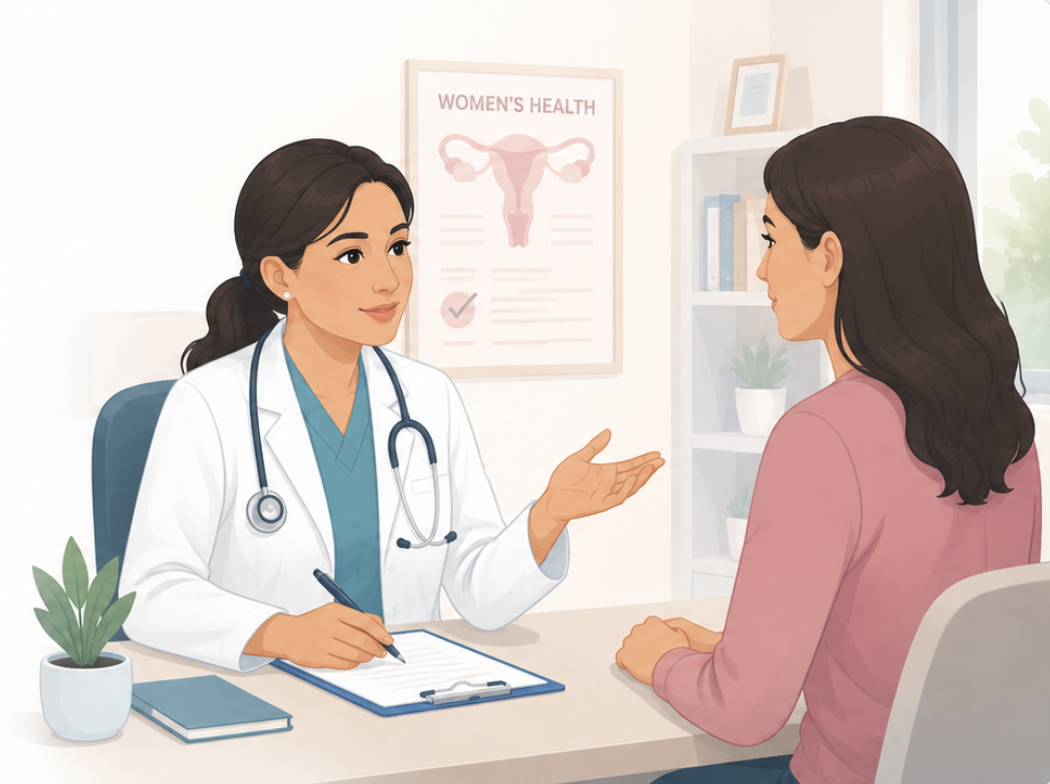
Further steps after understanding symptoms for detecting cervical cancer early
Further steps after understanding symptoms for detecting cervical cancer early
Understanding the symptoms of cervical cancer and taking action can be the key to catching it early, preventing delays, and improving outcomes. After becoming aware of the symptoms, staying vigilant becomes your best defense. Be mindful of any unusual vaginal discharge, bleeding, or pain, and perform regular self-checks.
If anything seems off, don’t hesitate to consult a healthcare professional for a thorough evaluation. Regular screenings, like Pap smears and HPV tests, combined with staying alert to any changes, are crucial steps in detecting cervical cancer early and protecting your health.

Medical Disclaimer
Disclaimer: This article is provided for medical knowledge and educational purposes only. It is not intended to replace professional medical advice, diagnosis, or treatment. Always consult a qualified healthcare professional for any medical concerns.